Scientific Program Overview
With 191 scientific sessions, the ICFP 2025 program was both robust and diverse. More than 1,600 presenters addressed the most pressing issues across 14 scientific tracks, examining each through the lenses of research, program implementation, and advocacy.
The scientific program showcased some of the field’s most innovative responses to persistent and urgent family planning (FP) / sexual and reproductive health and rights (SRHR) challenges. While it is impossible to capture the full depth of insights shared, we have synthesized key learnings into accessible thematic summaries designed to inform program design, policy advancement, and future research.
Use the menu on the right to explore our thematic synthesis, as well as notable quotes, awards, and other key takeaways from the scientific program.
Global Knowledge from ICFP
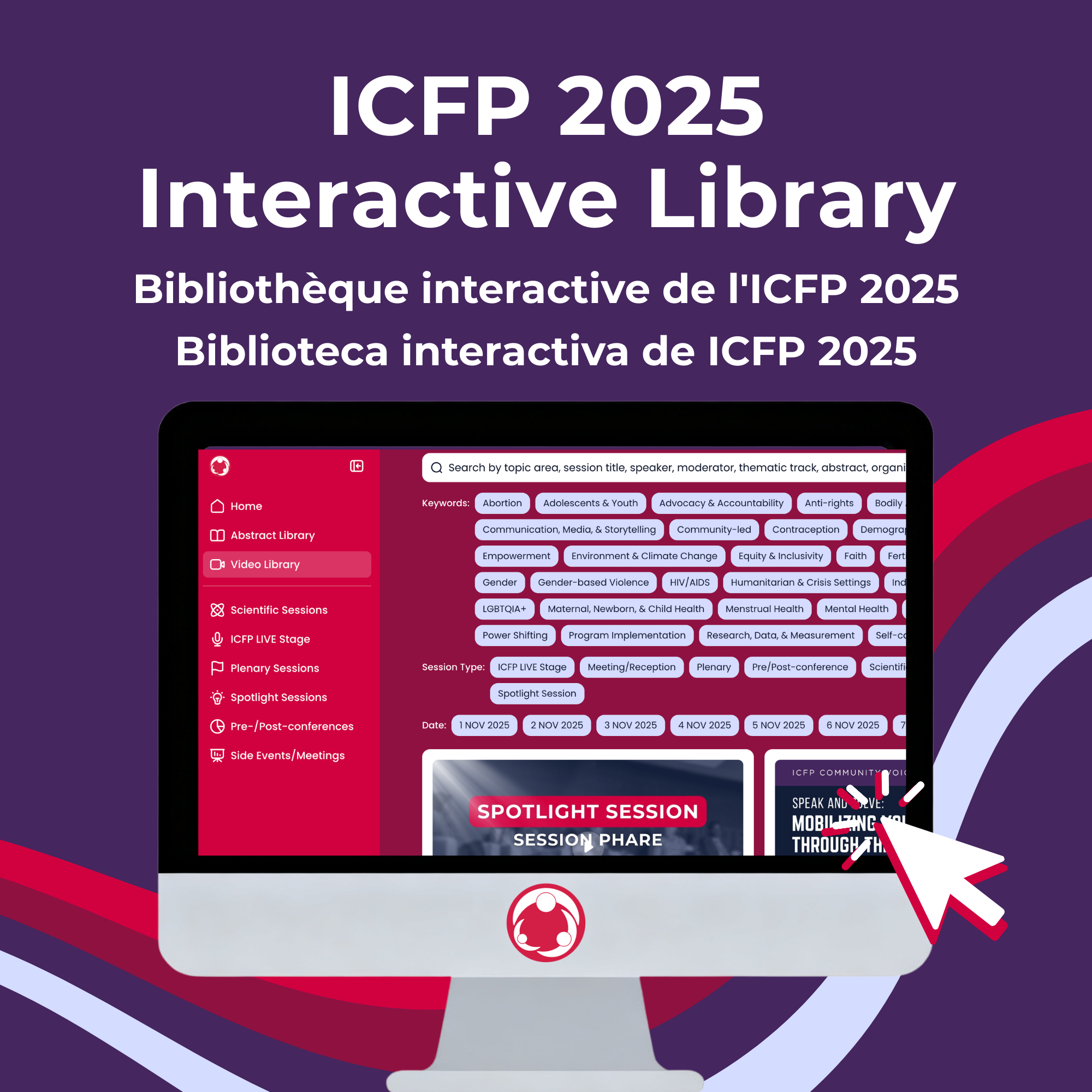
The ICFP 2025 Interactive Library is freely accessible online to a global community—across languages and regions.
Free Access to ICFP 2025 Sessions & Video Content
Browse the complete ICFP 2025 Interactive Library—from high-level plenaries to cutting-edge scientific sessions, the ICFP LIVE Stage, pre-conferences, side events, and more.
Access video recordings and accepted abstracts spanning research, programs, advocacy, and lived experience across regions and disciplines. This is more than an archive—it’s a practical resource to inform decisions, strengthen programs, and drive progress across SRHR.
We invite you to use this interactive library, share it, and put it into practice!
Thematic Synthesis of Abstracts Presented at ICFP 2025
The scientific program at ICFP 2025 reflected a comprehensive and forward-looking agenda that positions sexual and reproductive health and rights (SRHR) at the center of health systems strengthening, equity, and sustainable development.
Across tracks, presentations emphasized three overarching priorities: advancing equity and rights for marginalized populations; strengthening resilient, integrated systems through sustainable financing, markets, workforce, and data; and adapting SRHR strategies to emerging global pressures, including climate change, humanitarian crises, demographic shifts, and evolving social norms.
Evidence highlighted the importance of community engagement, gender-transformative and life-course approaches, youth leadership, and constructive partnerships with private sector and faith actors. Collectively, the findings underscore that achieving SRHR goals requires coordinated policy action that links innovation, accountability, and systems thinking to broader development, resilience, and human capital outcomes.
Track #1:
Equity Through Action: Advancing SRHR for All
Total Presentations: 265
Track 1 presentations were strongly unified around equity-driven approaches to SRHR, with a consistent emphasis on structural inequality, marginalized populations, and rights-based interventions. Across the papers, several recurring and interlinked thematic clusters emerged, reflecting a shared focus on how power, exclusion, and institutional arrangements shape reproductive health outcomes.
Summary & Key Takeaways
1. Inequities in Access to Contraception and SRHR Services
A central theme across the track was persistent inequity in access to contraception and SRHR services. Multiple presentations documented disparities in contraceptive intention, method availability, continuity of use, and quality of care among Indigenous and Afro-descendant populations, Roma women, adolescents and young people, and migrants or displaced populations. These inequities were commonly linked to socioeconomic disadvantage, geographic isolation, discrimination, and restrictive legal or policy environments.
2. Rights-Based Frameworks and Reproductive Justice
Many papers explicitly adopted reproductive justice and human rights frameworks, shifting attention beyond service coverage to autonomy, dignity, and agency. Presentations addressed undesired pregnancies, barriers to safe abortion and post-abortion care, and the consequences of criminalization and restrictive legal contexts. Several contributions examined the role of feminist and social movements in shaping policy change and advancing reproductive rights.
3. Community-Led and Culturally Grounded Interventions
A strong pattern across the track was the prioritization of community-led, participatory, and culturally grounded interventions. Presentations highlighted Indigenous-designed programs, peer-led education initiatives, grassroots organizing, and co-creation of services with affected communities. Evidence suggested these approaches can improve trust, relevance, and uptake where conventional health systems have historically failed marginalized groups.
4. Adolescents, Young People, and Comprehensive Sexuality Education
Several abstracts focused on adolescent and youth SRHR, examining early and unintended pregnancy, gaps in comprehensive sexuality education, and the role of digital and mobile health tools. These studies underscored adolescence as a critical life stage for intervention and highlighted the influence of social norms and structural constraints on young people’s reproductive decision-making.
5. Health Systems, Provider Practices, and Structural Barriers
Another recurring topic concerned health system performance and provider behavior. Presentations documented provider bias, discrimination, fragmented referral pathways, and communication failures between providers and communities. Presenters used mixed-methods designs to link system-level constraints with lived experiences of exclusion and substandard care.
6. Digital and Innovative Approaches to SRHR
A smaller but notable subset of presentations explored digital health tools and service delivery innovations aimed at improving access to information, supporting contraceptive decision-making, and enhancing client–provider communication. These tools were generally framed as complements to, rather than substitutes for, structural and policy reform.
Conclusion
Track 1 papers conveyed a coherent narrative: improving family planning and SRHR outcomes requires moving beyond technical solutions toward equity-centered, rights-based, and community-driven strategies. The dominant pattern across presentations was the integration of social justice perspectives with health systems analysis and population-specific evidence to address entrenched reproductive health inequities.
Track #2:
Environment and Climate Change
Total Presentations: 39
Track 2 presentations highlighted the growing and multifaceted intersections between climate change, environmental stressors, and SRHR. Across the abstracts, a coherent set of thematic patterns emerged, emphasizing how climate-related shocks and environmental degradation shape reproductive health needs, service access, and vulnerability—particularly among women and marginalized populations.
Summary & Key Takeaways
1. Climate Shocks and Disruptions to SRHR Services
A central theme across the track was the impact of acute and chronic climate shocks on the availability and continuity of SRHR services. Presentations documented how floods, droughts, extreme heat, and other climate-related events disrupt health facility operations, supply chains, and outreach activities. Several studies highlighted service interruptions during environmental emergencies, noting reduced contraceptive access, delayed care, and increased strain on already fragile health systems.
2. Gendered Vulnerability and Differential Impacts on Women
Many abstracts emphasized that climate and environmental stressors are not gender-neutral. A recurring focus was on the disproportionate burden borne by women, particularly in low-resource and climate-exposed settings. Studies examined how environmental insecurity intersects with gender roles, care responsibilities, and economic precarity to shape reproductive health risks and decision-making.
3. Community-Level Impacts and Local Adaptation Responses
Another prominent cluster of papers focused on community-level experiences and responses to climate change. Presentations documented how environmental degradation and climate variability affect livelihoods, mobility, and household stability, with downstream consequences for family planning behaviors and service use.
4. Integration of SRHR into Climate and Resilience Frameworks
A cross-cutting theme across the track was the call for greater integration of SRHR within climate adaptation, disaster preparedness, and resilience-building efforts. Presentations argued that SRHR is often absent from environmental and climate policy frameworks, despite clear evidence of interconnected impacts.
Conclusion
Track 2 papers conveyed a clear message: climate change and environmental stressors are increasingly central determinants of sexual and reproductive health outcomes. The dominant pattern across presentations was the recognition that protecting SRHR in the context of climate change requires resilient health systems, community-centered responses, and deliberate integration of reproductive health into climate and environmental policy agendas.
Track #3:
Population and Sustainable Development
Total Presentations: 41
Track 3 presentations examined the relationships between population dynamics and sustainable development, with a focus on how fertility trends, demographic change, and reproductive health intersect with long-term social, economic, and environmental outcomes. Across the abstracts, contributors emphasized population change as both a driver and consequence of development pathways.
Summary & Key Takeaways
1. Fertility Trends, Demographic Change, and Development Outcomes
A dominant theme across the track was the role of fertility change and age structure in shaping development trajectories. Multiple presentations explored how declining fertility, changes in dependency ratios, and shifts in population age composition influence economic growth, labor markets, and human capital accumulation. Several papers emphasized that demographic dividends are contingent on parallel investments in education, health, and employment.
2. Population Dynamics and Inequality
Another recurring focus concerned the unequal distribution of demographic change and its implications for inclusive development. Abstracts examined socioeconomic, geographic, and gender-based disparities in fertility, reproductive outcomes, and access to services. Evidence suggested that uneven demographic transitions can reinforce inequality if development strategies do not explicitly address population sub-groups left behind.
3. Migration, Urbanization, and Spatial Dimensions of Population Change
Several studies addressed migration and urbanization as central features of population dynamics. Presentations examined how internal and international migration, rapid urban growth, and spatial concentration of populations shape access to services, employment opportunities, and social protection systems. These papers highlighted the importance of integrating population mobility into development planning.
Conclusion
Track 3 papers reinforced the importance of incorporating population dynamics into sustainable development strategies. The dominant pattern across presentations was a call for integrated, forward-looking policies that link reproductive health, demographic change, and development planning to support inclusive and sustainable growth.
Track #4:
Social Norms and Behavior Change
Total Presentations: 100
Track 4 presentations focused on the role of social norms, beliefs, and behavioral processes in shaping SRHR outcomes. Across the abstracts, contributors examined how individual choices around contraception, fertility, and service use are embedded within broader social, cultural, and gendered contexts, and how behavior change interventions can shift these dynamics.
Summary & Key Takeaways
1. Gender Norms, Power Relations, and Reproductive Decision-Making
A central theme across the track was the influence of gender norms and power relations on reproductive health behaviors. Presentations explored how norms related to masculinity, femininity, fertility expectations, and partnership dynamics shape contraceptive use, negotiation, and autonomy. Several studies highlighted the role of male partners, household decision-making structures, and unequal power relations in reinforcing or constraining women’s reproductive choices.
2. Social Norms and Community-Level Influences
Many abstracts emphasized that reproductive behaviors are strongly shaped by community expectations and social reference groups. Studies examined how norms transmitted through families, peers, religious leaders, and community institutions influence attitudes toward family planning, adolescent sexuality, and service utilization. Evidence suggested that community-level norm change is often necessary for sustained individual behavior change.
3. Behavior Change Interventions and Communication Strategies
A prominent cluster of papers focused on the design and evaluation of behavior change interventions. Presentations covered social and behavior change communication (SBCC) strategies, mass and digital media campaigns, peer-led approaches, and interpersonal counseling. Several studies assessed how message framing, delivery channels, and cultural relevance affect intervention effectiveness.
4. Adolescents, Youth, and Norms Around Sexuality
Several abstracts focused specifically on adolescents and young people, examining norms related to sexuality, premarital sex, early marriage, and childbearing. These studies highlighted how stigma, silence, and misinformation shape young people’s access to information and services, and underscored the importance of age-appropriate, norm-sensitive interventions.
Conclusion
Track 4 papers reinforced that social norms and behavior change are central to improving SRHR outcomes. The dominant pattern across presentations was the recognition that effective interventions must engage with the social and cultural contexts in which reproductive decisions are made, combining individual-level strategies with community- and systems-level approaches.
Track #5:
Social Determinants of Reproductive Health Across the Life Course
Total Presentations: 85
Track 5 presentations examined how social, economic, and structural determinants shape SRHR outcomes across the life course. Across the abstracts, contributors emphasized that reproductive health behaviors and outcomes are deeply embedded in broader social conditions, including education, poverty, gender inequality, and access to resources, and that these influences accumulate over time.
Summary & Key Takeaways
1. Education, Poverty, and Socioeconomic Inequality
A dominant theme across the track was the role of education and socioeconomic status in shaping reproductive health outcomes. Presentations documented strong gradients in contraceptive use, fertility, and maternal health outcomes by educational attainment, income, and household wealth. Several studies highlighted how poverty and limited schooling constrain reproductive choices, particularly for women and girls.
2. Gender Inequality and Structural Constraints
Many abstracts focused on gender inequality as a fundamental social determinant of reproductive health. Papers examined how unequal power relations, gender-based violence, restrictive gender norms, and limited economic opportunities affect autonomy, access to services, and reproductive decision-making across different stages of life.
3. Life-Course Perspectives on Reproductive Health
A recurring cluster of studies adopted a life-course perspective, examining how early-life conditions, adolescent experiences, and transitions into adulthood shape later reproductive outcomes. Presentations emphasized that disadvantages experienced early in life can have lasting effects on fertility trajectories, health, and wellbeing.
4. Place, Context, and Social Exclusion
Several presentations highlighted the importance of place and social context. Abstracts examined urban–rural differences, regional inequalities, and the experiences of socially excluded groups, including migrants, ethnic minorities, and people living in marginalized settings. These studies underscored how geographic and social exclusion compound other social determinants.
Conclusion
Track 5 papers reinforced that improving SRHR outcomes requires addressing the broader social and economic conditions that shape people’s lives across the life course. The dominant pattern across presentations was a call for integrated, equity-oriented policies that move beyond the health sector to tackle the structural determinants of reproductive health.
Track #6:
Gender and Power Dynamics
Total Presentations: 101
Track 6 presentations focused on gender and power dynamics as core determinants of SRHR. Across the abstracts, contributors examined how power relations operating at household, community, institutional, and structural levels shape reproductive autonomy, access to services, and health outcomes.
Summary & Key Takeaways
1. Power, Agency, and Reproductive Decision-Making
A dominant theme across the track was women’s agency in reproductive decision-making. Presentations examined who holds decision-making power over contraception, fertility, and timing of childbearing, often highlighting constraints imposed by partners, families, and social expectations. Evidence showed that limited agency is strongly associated with unmet need for contraception and adverse reproductive outcomes.
2. Gender-Based Violence and Reproductive Coercion
Many abstracts addressed gender-based violence and reproductive coercion as direct expressions of unequal power. Studies documented links between intimate partner violence, sexual violence, coercive control, and unintended pregnancy, unsafe abortion, and poor maternal health outcomes. These findings positioned violence as both a cause and a consequence of restricted reproductive autonomy.
3. Masculinities, Men, and Power Relations
A recurring cluster of papers focused on masculinities and the role of men in shaping reproductive health outcomes. Presentations examined male attitudes toward contraception and fertility, norms around masculinity and control, and interventions designed to engage men in more equitable and supportive roles.
4. Institutional and Structural Power
Several studies extended the analysis of power to institutional and structural domains. Presentations examined how laws, policies, health system practices, and provider behaviors reinforce gender inequality and constrain access to SRHR services. Evidence highlighted discriminatory policies, provider bias, and weak accountability mechanisms as key structural barriers.
Conclusion
Track 6 papers underscored that advancing SRHR requires confronting unequal power relations at multiple levels. The dominant pattern across presentations was a call for gender-transformative policies and programs that strengthen agency, prevent violence, and reform institutional practices that perpetuate inequality.
Track #7:
Access, Integration, and Quality of Care
Total Presentations: 248
Track 7 presentations focused on improving access to, integration of, and quality of SRHR services. Across the abstracts, contributors examined how health system design, service delivery models, and quality improvement efforts shape who is reached, what services are provided, and the experience of care across diverse settings.
Summary & Key Takeaways
1. Barriers to Access and Continuity of Care
A central theme across the track was persistent barriers to accessing SRHR services and maintaining continuity of care. Presentations documented geographic, financial, informational, and social barriers that limit service use, particularly for marginalized populations. Several studies highlighted discontinuities in care resulting from weak referral systems, stock-outs, and fragmented service delivery. Importantly, many abstracts went beyond documenting these constraints and discussed practical approaches to address them, including service integration, task-sharing, community-based outreach, digital tools, and quality improvement initiatives aimed at strengthening continuity and client-centered care.
2. Integration of SRHR Within Health Systems
Many abstracts examined models for integrating SRHR services within broader health platforms, including primary health care, maternal and child health, HIV services, and adolescent health programs. Evidence suggested that integration can reduce missed opportunities for care and improve efficiency, but also identified challenges related to workload, training, and coordination across service areas.
3. Quality of Care and Client Experience
A strong emphasis across the track was on quality of care, including technical quality, respectful care, and client-centered service provision. Presentations examined provider competence, counseling practices, informed choice, and client satisfaction, highlighting how quality influences uptake, continuation, and trust in services.
4. Health Workforce and Service Delivery Innovations
Several studies focused on the role of the health workforce and innovations in service delivery. Abstracts examined task-sharing, community-based delivery, outreach models, and the use of digital tools to support providers and clients. These approaches were often framed as strategies to extend reach and improve service quality in resource-constrained settings.
5. Technology, Innovation, and Contraceptive R&D
The track also highlighted the role of technological innovation in expanding choice and improving method fit. Presentations examined ongoing contraceptive research and development, as well as the introduction and scale-up of novel products designed to better meet users’ preferences across the life course. These included methods that are easier to self-administer, require fewer facility visits, or are more discreet and user-controlled. Several studies addressed implementation considerations for product introduction, including provider training, demand generation, regulatory pathways, and supply chain readiness.
Key Takeaways
Track 7 papers underscored that expanding access to SRHR services must go hand in hand with efforts to improve integration and quality of care. The dominant pattern across presentations was a call for health systems approaches that prioritize client-centeredness, continuity, and quality alongside service expansion.

Track #8:
Markets, Funding, and Commodities
Total Presentations: 71
Track 8 presentations focused on the market, financing, and commodity dimensions of SRHR. Across the abstracts, contributors examined how funding flows, market structures, supply chains, and pricing dynamics shape the availability, affordability, and sustainability of family planning commodities and services.
Summary & Key Takeaways
1. Financing for Family Planning and SRHR
A dominant theme across the track was the role of financing in sustaining and expanding access to family planning and SRHR. Presentations examined domestic financing, donor support, and blended financing models, highlighting both funding gaps and opportunities to improve efficiency and sustainability. Several studies addressed the implications of funding volatility and donor transitions for service delivery.
2. Commodity Security and Supply Chains
Many abstracts focused on contraceptive commodity security and supply chain performance. Presentations documented challenges related to forecasting, procurement, distribution, and stock management, as well as the consequences of stock-outs for contraceptive choice and continuity of use. Evidence underscored the importance of reliable and resilient supply systems.
3. Market Shaping and Private Sector Engagement
A recurring cluster of papers examined market shaping strategies and the role of the private sector in SRHR. Studies explored social marketing, public–private partnerships, and regulatory environments that influence product availability and quality. These contributions highlighted how well-functioning markets can complement public sector provision when appropriately governed.
4. Affordability, Pricing, and Equity
Several presentations addressed affordability and pricing as key determinants of access. Abstracts examined out-of-pocket costs, price sensitivity, and the distributional effects of pricing policies, emphasizing that market-based approaches must be designed to avoid exacerbating inequities among low-income and vulnerable populations.
Conclusion
Track 8 papers underscored that strong markets, adequate financing, and reliable commodity supply chains are foundational to achieving SRHR goals. The dominant pattern across presentations was a call for coordinated financing and market strategies that promote sustainability, resilience, and equity in access to family planning commodities.
Track #9:
Adolescents and Youth
Total Presentations: 238
Track 9 presentations centered on adolescents and young people, highlighting their distinct SRHR needs and the structural, social, and institutional barriers they face in accessing information and services. Across the abstracts, contributors emphasized adolescence as a critical life stage for shaping long-term reproductive health trajectories.
Summary & Key Takeaways
1. Adolescent Sexual and Reproductive Health Needs
A dominant theme across the track was unmet need for contraception and SRHR services among adolescents and youth. Presentations examined early and unintended pregnancy, unmet need for modern contraception, and gaps in access to youth-friendly services. Several studies highlighted disparities by age, gender, socioeconomic status, and geographic location.
2. Social Norms, Stigma, and Barriers to Service Use
Many abstracts focused on the role of social norms and stigma in shaping young people’s access to SRHR services. Presentations examined norms around premarital sex, fertility expectations, and gender roles, as well as the consequences of stigma, confidentiality concerns, and judgmental provider attitudes for service utilization.
3. Comprehensive Sexuality Education and Information Access
A recurring cluster of papers addressed comprehensive sexuality education (CSE) and access to accurate information. Studies examined school-based and community-based CSE programs, digital and mobile platforms, and peer-led approaches aimed at improving knowledge, attitudes, and decision-making among adolescents and youth.
4. Youth-Friendly Services and Programmatic Innovations
Several presentations highlighted innovations designed to make SRHR services more responsive to adolescents and young people. Abstracts examined youth-friendly service models, outreach and community engagement strategies, and integration of SRHR within broader youth programs. Evidence suggested that tailored service delivery approaches can improve uptake and continuity of care.
5. Participation, Voice, and Agency of Young People
Many papers emphasized the importance of youth participation and agency. Presentations documented participatory approaches that engage adolescents and youth in program design, advocacy, and research, highlighting the value of centering young people’s perspectives in SRHR interventions.
Key Takeaways
Track 9 papers reinforced that advancing adolescent and youth SRHR requires addressing both service delivery barriers and the broader social environments in which young people make reproductive decisions. The dominant pattern across presentations was a call for rights-based, age-appropriate, and youth-centered approaches that support autonomy, dignity, and informed choice.
Track #10:
Humanitarian Settings and Crisis-Affected Contexts
Total Presentations: 70
Track 10 presentations focused on SRHR in humanitarian and crisis-affected settings, including contexts of conflict, displacement, natural disasters, and protracted emergencies. Across the abstracts, contributors examined how crises disrupt health systems and exacerbate vulnerabilities, while also highlighting strategies to sustain and adapt SRHR services under extreme conditions.
Summary & Key Takeaways
1. Disruption of SRHR Services in Crisis Settings
A dominant theme across the track was the disruption of SRHR services during acute and protracted crises. Presentations documented service interruptions resulting from insecurity, population displacement, damaged infrastructure, and workforce shortages. Several studies highlighted declines in contraceptive availability and continuity of care, particularly for displaced women and adolescents.
2. Displacement, Vulnerability, and Protection Risks
Many abstracts emphasized the heightened vulnerability of populations affected by conflict or natural disasters. Presentations examined the SRHR needs of refugees, internally displaced persons, and host communities, with attention to increased risks of unintended pregnancy, sexual violence, and maternal morbidity and mortality. These studies underscored the intersection of displacement, gender inequality, and protection concerns.
3. Service Delivery Adaptations and Innovations
A recurring cluster of papers focused on adaptations to service delivery in humanitarian contexts. Abstracts examined mobile clinics, community-based distribution, task-sharing, and integration of SRHR within emergency preparedness planning. Evidence suggested that flexible and decentralized models are critical for maintaining access during crises.
4. Coordination, Integration, and Health Systems Resilience
Several presentations addressed coordination and integration challenges in humanitarian response. Studies examined collaboration among humanitarian actors, governments, and development partners, as well as the integration of SRHR into broader emergency preparedness. These papers highlighted the importance of strengthening health systems resilience in crisis-prone settings.
Conclusion
Track 10 papers underscored that SRHR is a critical component of emergency preparedness, humanitarian response and recovery. The dominant pattern across presentations was a call to move beyond short-term, emergency-only approaches toward integrated, rights-based, and resilient SRHR programming that bridges humanitarian and development efforts.
Track #11:
Faith and Religion
Total Presentations: 30
Track 11 presentations explored the complex roles of faith, religion, and religious institutions in shaping SRHR. Across the abstracts, contributors examined how religious beliefs, values, and leadership can both constrain and enable access to SRHR services, and how engagement with faith actors can influence norms, policies, and service delivery.
Summary & Key Takeaways
1. Religious Norms and SRHR Attitudes
A dominant theme across the track was the influence of religious norms and beliefs on attitudes toward contraception, fertility, sexuality, and reproductive decision-making. Presentations documented how faith-based values shape individual and community perspectives on SRHR, sometimes reinforcing restrictive norms while in other contexts supporting informed choice and responsible parenthood.
2. Engagement with Faith Leaders and Institutions
Many abstracts focused on strategies for engaging faith leaders and religious institutions in SRHR initiatives. Studies examined dialogue-based approaches, values clarification, and partnerships with faith-based organizations to promote supportive interpretations of religious teachings. Evidence suggested that faith leader engagement can be pivotal in shifting norms and increasing community acceptance of family planning.
3. Faith-Based Service Delivery and Health Systems
A recurring cluster of papers examined the role of faith-based organizations as service providers. Presentations explored the contributions of faith-based health facilities to SRHR service delivery, including family planning, maternal health, and adolescent services, as well as tensions related to service scope, referral practices, and alignment with national policies.
4. Navigating Tensions Between Doctrine and Rights
Several abstracts addressed the tensions between religious doctrine and rights-based approaches to SRHR. Studies examined ethical, legal, and programmatic challenges in reconciling faith teachings with commitments to autonomy, gender equality, and non-discrimination. These papers highlighted the importance of respectful engagement and context-sensitive strategies.
Conclusion
Track 11 papers underscored that faith and religion are influential forces in SRHR that cannot be ignored in policy or programming. The dominant pattern across presentations was a call for constructive engagement with faith actors that respects religious contexts while advancing rights-based, evidence-informed SRHR goals.
Track #12:
Advances in Measurement and Data for SRHR
Total Presentations: 72
Track 12 presentations focused on advances in measurement, data systems, and analytical approaches for SRHR. Across the abstracts, contributors examined how improved data collection, innovative indicators, and methodological rigor can strengthen evidence generation, monitoring, and accountability across diverse contexts.
Summary & Key Takeaways
1. Measurement of SRHR Outcomes and Experiences
A dominant theme across the track was the development and refinement of measures to capture SRHR outcomes and experiences more accurately. Presentations examined indicators related to contraceptive use, fertility intentions, quality of care, autonomy, and client experience, highlighting limitations of existing measures and proposing improvements to better reflect lived realities.
2. Equity, Disaggregation, and Data Gaps
Many abstracts emphasized the importance of equity-focused measurement and data disaggregation. Studies examined how gaps in data availability and quality obscure disparities by age, gender, socioeconomic status, geography, and other axes of inequality. Presentations highlighted approaches to improving disaggregation to support more equitable policy and program design.
3. Innovative Data Sources and Methods
A recurring cluster of papers explored innovative data sources and methodological approaches. Presentations examined the use of digital data collection tools, routine health information systems, geospatial data, and mixed-methods designs to complement traditional surveys and improve timeliness and relevance of SRHR data.
4. Artificial Intelligence, Machine Learning, and Advanced Analytics
A subset of presentations examined the application of artificial intelligence (AI) and machine learning (ML) to strengthen SRHR data systems and program performance. Abstracts explored how advanced analytic techniques can be used to improve data quality through anomaly detection and secondary data editing, enhance commodity forecasting and supply chain planning, and increase operational efficiency. These contributions positioned AI and ML as complementary tools that can augment existing data systems and support more timely, accurate, and responsive decision-making.
5. Monitoring, Evaluation, and Learning
Several abstracts focused on strengthening monitoring, learning, and evaluation systems. Studies examined how improved indicators, dashboards, and feedback loops can support adaptive management and evidence-informed decision-making at program and policy levels.
6. Data Use, Transparency, and Accountability
Beyond data production, many presentations addressed data use and governance. Abstracts examined how data can be translated into actionable insights, shared transparently, and used to hold systems accountable for SRHR commitments, emphasizing the political and institutional dimensions of measurement.
Conclusion
Track 12 papers underscored that robust, inclusive, and policy-relevant data are foundational to advancing SRHR. The dominant pattern across presentations was a call for continued investment in measurement innovation, equity-focused data systems, and stronger links between data generation and decision-making.
Track #13:
Sexuality and Sexual Health
Total Presentations: 50
Track 13 presentations focused on sexuality and sexual health as integral components of SRHR. Across the abstracts, contributors examined how sexuality, pleasure, identity, relationships, and sexual wellbeing intersect with health systems, social norms, and rights-based approaches, expanding the SRHR agenda beyond fertility regulation alone.
Summary & Key Takeaways
1. Sexual Health, Wellbeing, and Pleasure
A dominant theme across the track was the recognition of sexual health as encompassing wellbeing and pleasure. Presentations explored how pleasure-positive, person-centered approaches can improve sexual wellbeing, communication, and engagement with health services, while challenging stigma and silence surrounding sexuality.
2. Sexual Rights, Autonomy, and Consent
Many abstracts emphasized sexual rights, autonomy, and consent as foundational to sexual health. Studies examined barriers to exercising sexual autonomy, including coercion, violence, and restrictive norms, and highlighted the importance of consent, bodily integrity, and agency across diverse populations and life stages.
3. Sexual Diversity, Identity, and Inclusion
A recurring cluster of papers focused on sexual diversity and the experiences of LGBTQ+ populations. Presentations examined stigma, discrimination, and exclusion faced by sexual and gender minorities, as well as interventions aimed at creating inclusive, affirming, and non-discriminatory sexual health services.
4. Social Norms, Relationships, and Communication
Several studies examined how social norms and relationship dynamics shape sexual behavior and health outcomes. Abstracts explored communication within partnerships, expectations around sexuality, and the influence of cultural and gender norms on sexual expression, risk, and help-seeking behavior.
Conclusion
Track 13 papers underscored that sexuality and sexual health are central to SRHR and human wellbeing. The dominant pattern across presentations was a call to normalize sexuality within health and policy discourse, advance sexual rights, and deliver inclusive, person-centered sexual health services that respect diversity and dignity.
Track #14:
Overlooked Areas in Sexual and Reproductive Health and Rights
Total Presentations: 79
Track 14 presentations focused on overlooked, under-researched, and marginalized areas within SRHR. Across the abstracts, contributors highlighted populations, topics, and experiences that are often excluded from mainstream research, policy, and programming, calling attention to gaps in evidence and practice.
Summary & Key Takeaways
1. Marginalized Populations and Invisible Needs
A dominant theme across the track was the identification of populations whose SRHR needs remain insufficiently recognized. Presentations examined the experiences of people with disabilities, older adults, incarcerated individuals, people in informal or precarious work, and others whose reproductive health needs are often rendered invisible within standard service models.
2. Neglected SRHR Topics and Life Stages
Many abstracts focused on SRHR topics that receive limited attention in policy and programming. Studies examined menopause, infertility, subfertility, sexual dysfunction, and reproductive health beyond childbearing years, emphasizing the need to expand SRHR frameworks across the full life course.
3. Intersectionality and Compounded Exclusion
A recurring cluster of papers adopted an intersectional lens, examining how overlapping forms of disadvantage—such as disability, age, poverty, gender identity, and social stigma—compound barriers to SRHR access. These presentations underscored that overlooking intersectionality risks reinforcing inequities.
4. Service Gaps and System Needs for Improvement
Several presentations highlighted gaps in health systems and service delivery models that fail to accommodate overlooked SRHR needs. Abstracts examined limited provider training, inadequate guidelines, and the absence of appropriate referral pathways for marginalized or atypical SRHR concerns.
Conclusion
Track 14 papers underscored that advancing SRHR requires deliberately broadening the scope of who and what is considered in research, policy, and programming. The dominant pattern across presentations was a call to recognize and address overlooked SRHR needs through inclusive, rights-based, and intersectional approaches.

Who Submitted Abstracts
Search the interactive charts below to see a breakdown of ICFP 2025’s 5,174 abstract submissions by country, age, language, sector, and track.
Reflections from the ICFP Scientific Community
WHO Scientific Writing Workshop
At ICFP 2025 in Bogotá, Colombia, the World Health Organization (WHO), in collaboration with the Johns Hopkins Bloomberg School of Public Health and partner institutions, hosted a four-day Scientific Writing, Mentoring, and Coaching workshop for junior scientists with abstracts accepted to the conference. The workshop brought together more than 100 early-career researchers, many working in low- and middle-income countries, to strengthen scientific writing skills and support publication.
The workshop combined in-person training during ICFP with mentoring designed to extend beyond the conference. Participants joined expert-led plenary sessions, panel discussions, and interactive Q&A focused on developing high-quality manuscripts, understanding journal expectations, and navigating the peer-review process.
During ICFP, participants also took part in small-group mentoring sessions with subject-matter experts aligned to the conference themes. These sessions created space for tailored feedback, discussion, and peer learning, helping participants advance their accepted abstracts toward full manuscripts.
Next steps include a six-month post-conference mentoring program managed by the Geneva Foundation for Medical Education and Research. Participants will receive ongoing mentoring, webinars, and peer support, with the goal of submitting manuscripts to peer-reviewed journals within six months and achieving publication within the following year.
This workshop builds on scientific writing initiatives hosted at previous ICFP conferences, including the inaugural course in 2022. By supporting junior scientists, program implementers, health workers, and government and NGO staff—many publishing for the first time—the workshop strengthens global research capacity and extends ICFP’s impact well beyond the conference.
Elevating Voices, Evidence, & Impact:
The ICFP Power of Family Planning Award
This highly-competitive travel award recognizes outstanding research, program implementation, and advocacy that position family planning (FP) as a foundation for health, equity, and development.
By supporting numerous global researchers with accepted abstracts to attend the ICFP 2025 conference in Bogotá, this award helped bring diverse perspectives and high-impact evidence into ICFP’s scientific program.