Young people don’t split their lives into “sexual and reproductive health and rights (SRHR)” and “mental health” the way our health and education systems do. A breakup, a pregnancy scare, an unsafe classroom, a bad night on social media; none of that comes pre-sorted into categories. It just shows up as one hard week. And yet programs and decision-makers keep building separate teams, separate budget lines, separate programming, as if a young person is supposed to know which door to knock on before they’ve even figured out what’s wrong.
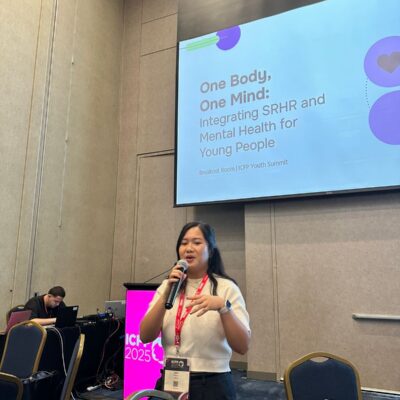
That was the whole point of a breakout session I led at the ICFP Youth Summit at ICFP 2025 in November, 2025, called “One Body, One Mind”. Youth advocates Amour Dieu-Donne Vodounhessi (Benin) and Alex Llamazares (Argentina) opened with their own stories. Tina Mensa-Kwao (United States & Ghana), Youth Commissioner on the Second Lancet Commission on Adolescent Health and Wellbeing, brought the evidence. And the working groups spent the rest of the session on the harder question: fine, we agree these are connected, but now what?
SRHR and Mental Health: The Breakdown
Here’s where it starts. Relationship stress, body image, stigma, violence, not having any say over your own life – none of that respects the line we draw between “sexual health” and “mental health.” Amour and Alex made that painfully concrete: the same stretch of stigma or instability showing up in both parts of their lives at the same time–because it was never really two separate things. Even the risk factors to both sexual health and mental health complications overlap almost exactly; violence, poverty, exclusion, digital harm. And so do the protective ones: a safe school, comprehensive sexuality education (CSE), a stable sense of who you are, someone who has your back. It’s also what one door instead of five actually does for someone trying to get help; fragmented referrals just make people give up halfway through, and it’s a better use of money that’s already stretched thin, which is the kind of cross-sectoral work donors are increasingly willing to fund.
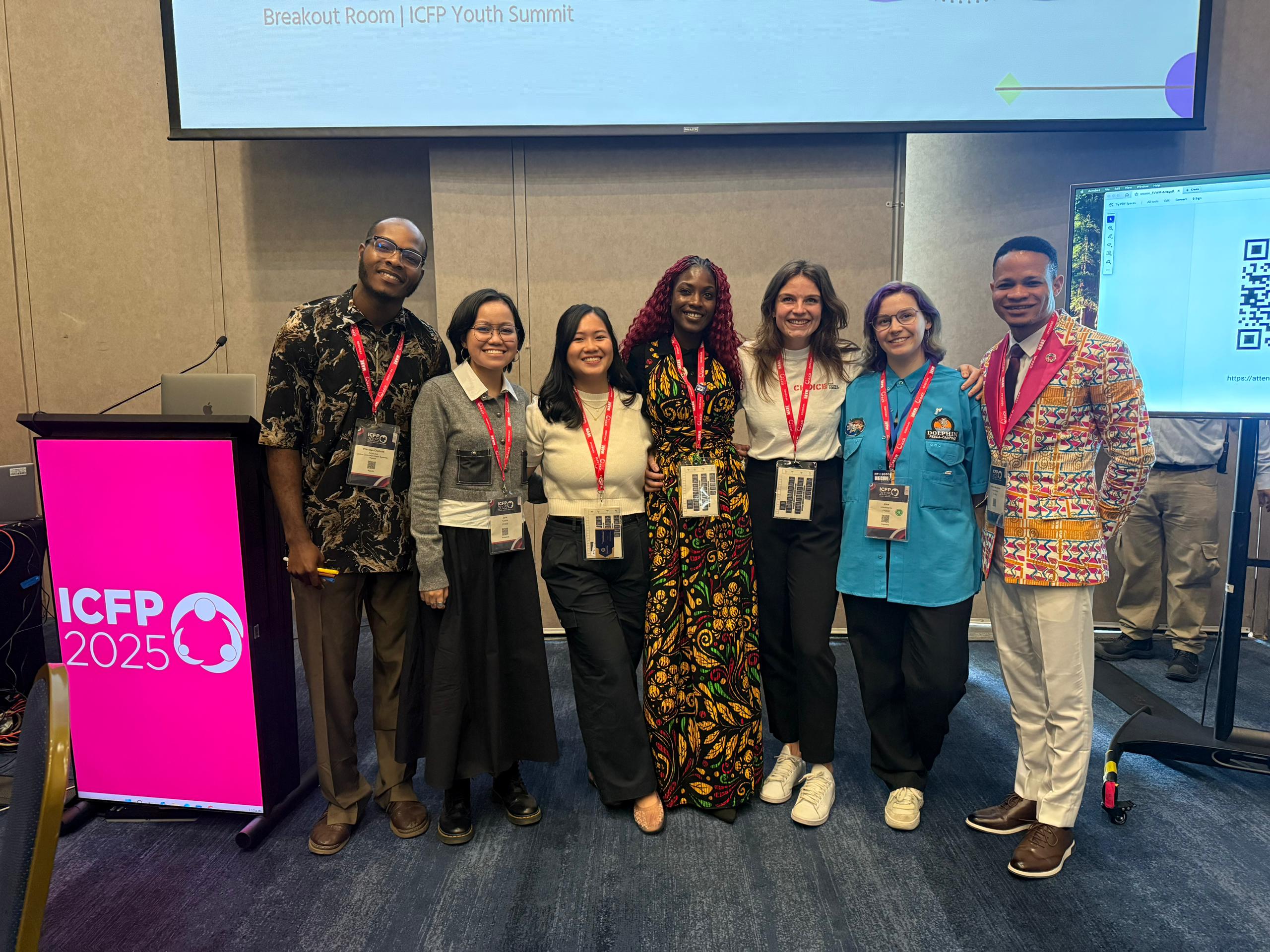
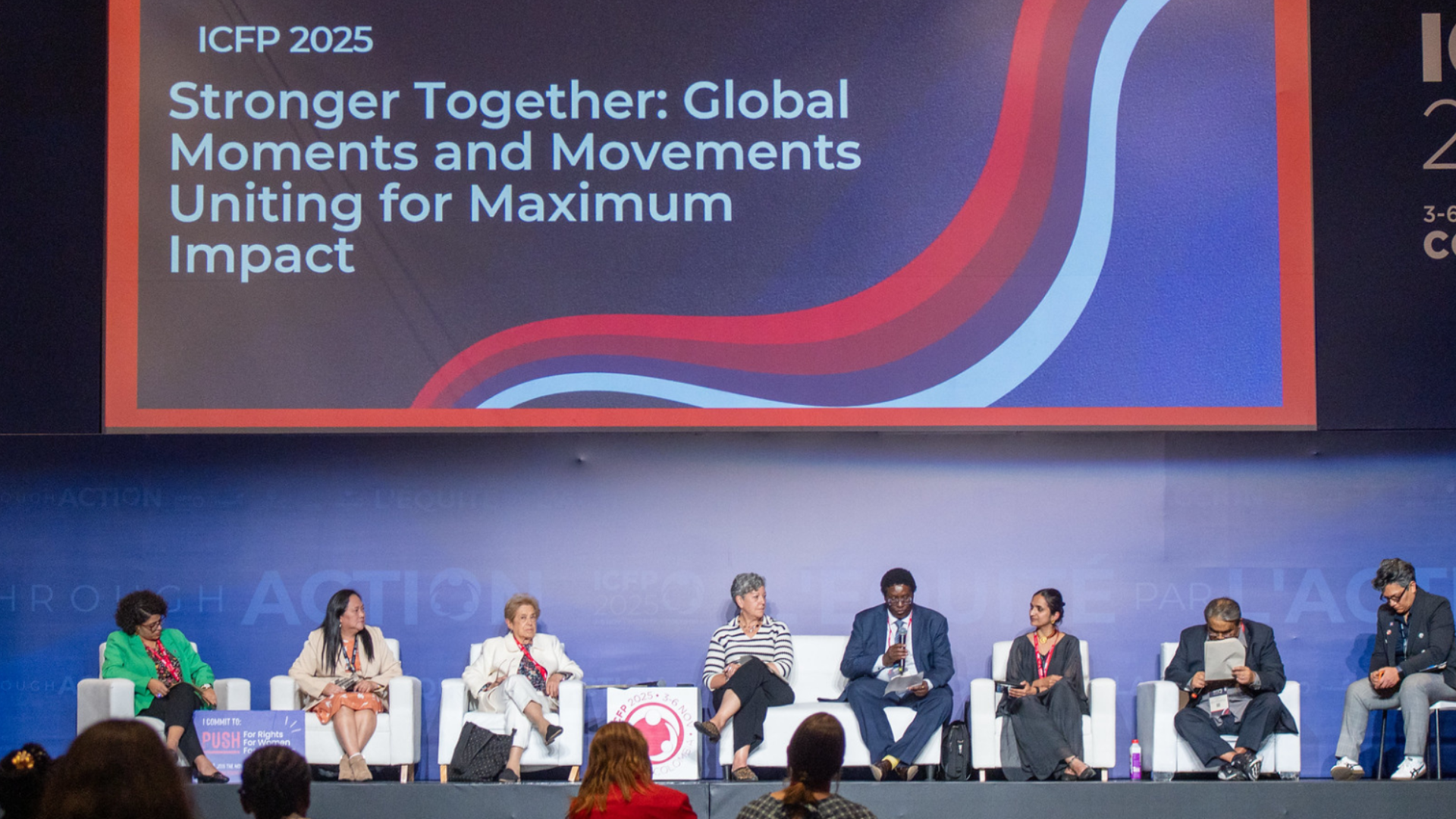
The facilitators at the breakout session at the ICFP 2025 Youth Summit
Tackling Mental Health and SRHR Through Better Pathways to Care
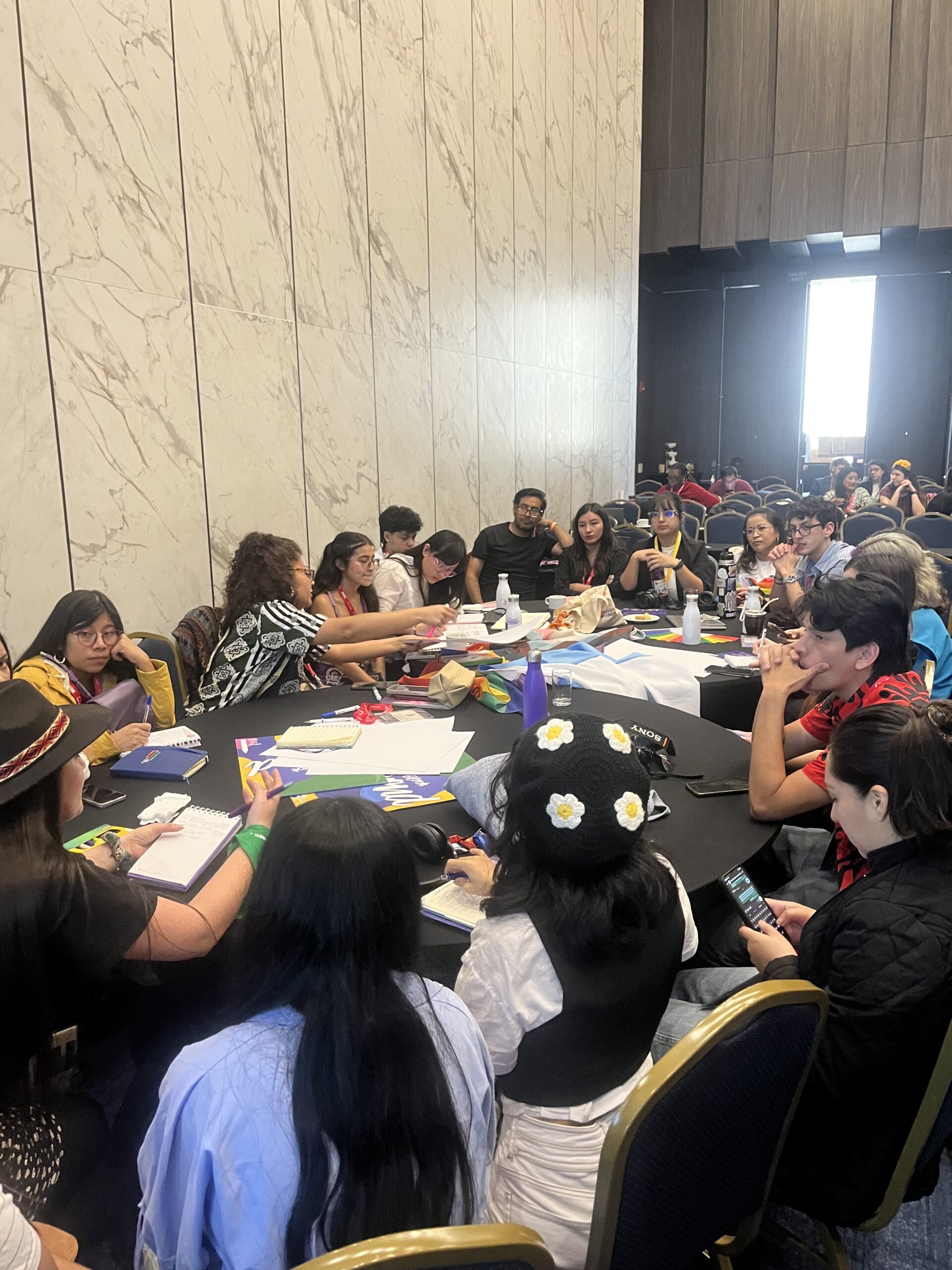
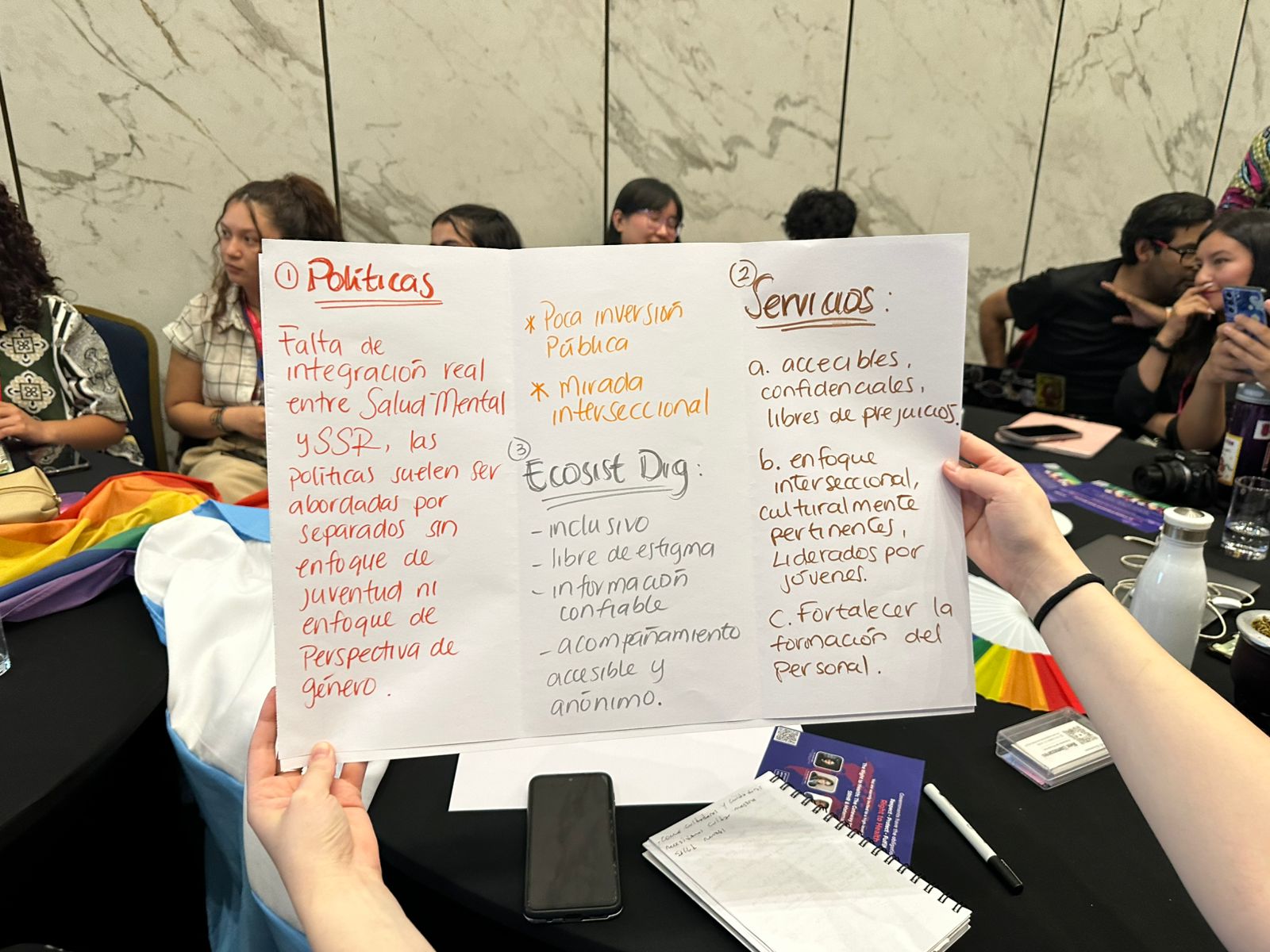
A few models already show what improved integration of mental health and SRHR programming can look like: CSE paired with social-emotional learning, trauma-informed SRHR services, HIV programmes that build in mental health support from day one instead of a tack-on. In the session, participants discussed the honest caveat that trials measuring both outcomes together in adolescents are still rare. We’re building this faster than we’re proving it works. This is why the working groups didn’t stop at “we should integrate these.” They split into three: policy and advocacy, youth-friendly services, and digital spaces.
Policy
On policy, it comes down to who’s actually in the room. The people writing SRHR policy and the people writing mental health policy still mostly work in separate silos, often operating in different technical working groups and rarely at the same table at the same time. The ask from young people in this breakout session wasn’t complicated; we need real integration between the people doing the policymaking, instead of just cross-referencing each other’s documents after the fact.
Services
Digital
On digital ecosystems, it’s about designing tools that integrate mental health and SRHR topics. A lot of the same factors within the digital environment shape both mental health and SRHR outcomes for young people, who turn to digital spaces for both, for the same reasons: anonymity, less stigma, not having to say the thing out loud to someone’s face. On the tools side, that means actually integrating mental health content and support into SRHR apps, which starts with getting both sets of experts working together. It also means banding together to push for safer digital spaces more broadly – social media, AI, edtech apps, etc. – because design choices, algorithmic amplification, and safety by design don’t stay on one side of that line either.
Conclusion: Let’s Build It
We facilitated one small room in one session at one international health summit. That’s not enough to fix systems that historically work in siloes. But we’re here to argue that this isn’t only the smart, strategic thing to do; young people are the ones calling for it, and when you actually sit with what they’re asking for, it starts to feel almost obvious. We already know it’s possible; the models exist. What’s still missing is more attention, and more evidence, on how to build this at scale.
About the Author
Neira Budiono was named one of the Gates Institute’s 120 Under 40: New Generation of Family Planning Leaders, as well as an ICFP 2025 Youth Trailblazer. She has over seven years of experience at the intersection of youth, health, and technology. She holds an MSc in Global Health from the University of Oxford as a Jardine-Oxford Scholar. She co-founded Tabu.id, an award-winning digital sexuality education platform in Indonesia and also serves as Safe Online’s Community of Practice Coordinator, where she builds strategic partnerships and facilitates knowledge exchange among tech industry partners, academia, and practitioners in the online child safety space.