
ICFP Private Sector Subcommittee
This community is dedicated to fostering engagement with non-state actors to meet evolving global family planning needs.
FAQ
What Do You Do?
The ICFP Private Sector Subcommittee’s overall goal is to increase the strategic visibility and participation of the private sector, through advanced planning of events and efforts at the ICFP conference and beyond. This subcommittee is engaged in all private sector-related activities of the ICFP platform.
Who is Involved?
ICFP is fortunate enough to have the support and expertise of a wide range of leaders, advocates, young people, and artists to keep family planning at the center of the conversation on health and rights.
Examples of organizations the Private Sector Subcommittee seeks to engage include midwifery associations, independent social enterprises and clinics, as well as private health insurance providers and employer groups.
Organizations represented on the subcommittee:
Abt Associates, Avenir Health, Bayer, Bill & Melinda Gates Foundation, Bill & Melinda Gates Institute, CARE, CHAI, Commission of Gender Equality (South Africa), Danish Family Planning Association, Female Health Company, FHI360, FP2020, Global Affairs Canada, Healthy Reform Foundation of Nigeria, Incepta Pharmaceuticals (Bangladesh), India Health Action Trust, Institute of Business Management (Pakistan), Institute for Social and Youth Development (Pakistan), IntraHealth, IPPF, Jhpiego, John Snow Incorporated, Knit Together Initiative (Nigeria), Love Matters India, Marie Stopes International, Medicines360, Ministry of Health, Kisumu West (Kenya), Palladium, PATH, Pathfinder International, Pfizer, Population Council, Population Services International, PT Tunggal, Reproductive Health Supplies Coalition (RHSC), SERAC Bangladesh, Social Marketing Company SMC (Bangladesh), UNFPA, UN Foundation, USAID, WCG Cares, The William Davidson Institute at the University of Michigan (WDI), Y Coalition.
Contact
For more information about the ICFP 2025 Private Sector Subcommittee, please contact the ICFP Secretariat at info@theicfp.org.
About This Subcommittee
Bridging Private Sector Expertise with Global Health Improvements
The private sector—in relation to family planning (FP)—is defined as non-state market actors with direct, supporting, or enabling functions aimed at increasing access, availability and use of FP products and services. These include a wide range of actors: commercial for-profit, faith-based, and non-profit; US-based, local and international; formal and informal sectors, including traditional and community health providers.
While this a relatively broad definition, the commercial for-profit, and health provider segments (outside of faith-based and non-profit / SMO) as well as other actors noted above would benefit from more clear inclusion and valuation associated with their role in the FP equation.
The ICFP Private Sector Subcommittee was formally established in January 2020 with the goal of planning and generating activities to increase the strategic visibility and engagement of the private sector at ICFP.
The work of this subcommittee is important as forecasts of stagnating (or declining) donor funding for family planning raises concerns about the future and triggers more focus on the private sector’s ability to meet users’ needs. While the topic of sexual and reproductive health is highly visible and demand is growing, there is a need to mobilize private sector resources and participation.
Historical participation of large innovator manufacturers and social marketing organizations at the ICFP conference is well-recognized and valued. This subcommittee strives to engage with those actors as well as additional segments of the private sector, to increase the reach to organizations that play a significant and growing role in enabling and providing family planning related services and products.
Sponsors
Thank you to the sponsors of the ICFP 2025 Private Sector Subcommittee Pre-conference for supporting this important work.


ICFP Private Sector Co-chairs
Private Sector Subcommittee
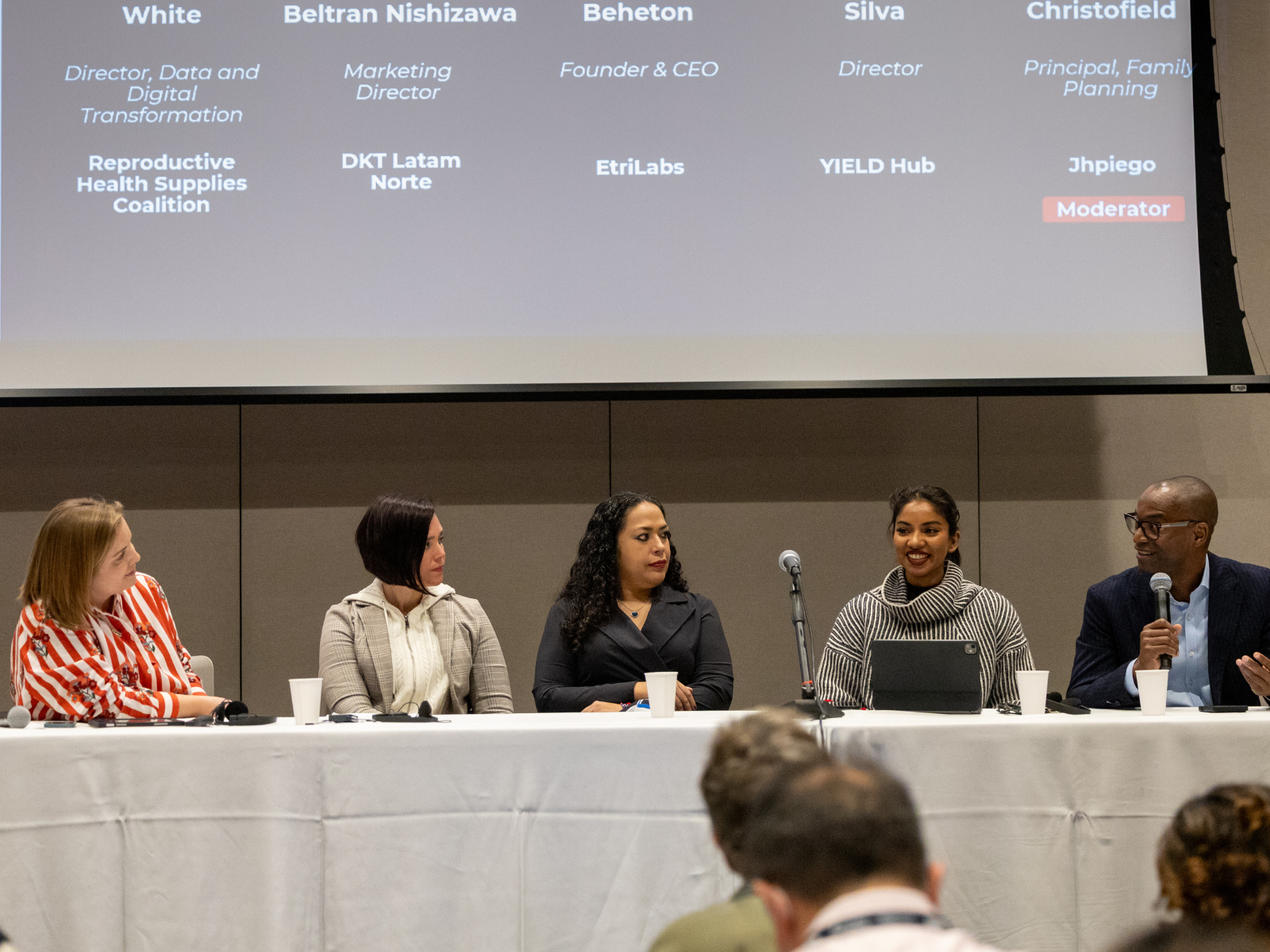
The Private Sector Subcommittee pushed the field to fundamentally rethink the private sector’s role in sexual and reproductive health—from “gap-filler when the public sector fails” to “primary channel for sustainable, consumer-driven reproductive health.” The subcommittee tackled tough questions about affordability, quality, equity, and when profit is acceptable in SRHR delivery, bringing provocative and essential conversations to ICFP 2025.
Major Events, Activities, and Impact
The subcommittee facilitated sessions that asked hard questions: What strategies make private sector services affordable without compromising sustainability? How do we hold private providers accountable for creating informed demand and combating misinformation? What examples exist of smart regulation that supports private sector work, particularly for abortion where legal contexts vary? These provocative questions generated rich dialogue about the private sector’s evolving role in a changing global landscape.
Impact:
ICFP 2025 refused retreat and demonstrated solidarity—3,000 people gathering signaled visible, tangible sector cohesion. Abortion was re-centered at ICFP, no longer relegated to the margins of family planning conversation. New partnerships formed with mPharma, eP4FP Digital Platform Partnership (Nigeria), Gates Foundation with Society for Family Health and Bayer Colombia.
Key Takeaways
Private Sector Redefinition: From Gap-Filler to Primary Channel
Private sector accounts for 30% of services in low-income countries but 50% of costs, serving different populations (urban, middle-class, willing to pay). This creates an equity question: Should donors subsidize services for those who can afford them? The answer shapes whether inequality increases (more services but more out-of-pocket costs) or efficiency improves (competition drives down costs).
Agility Is Key in Shifting Political Landscapes
Political landscapes across Africa shift rapidly. DKT’s Honduras example demonstrates private sector agility: when a new president lifted a 14-year ban on emergency contraception in July 2025, DKT secured product registration, launched marketing, established distribution, and became market leader before larger organizations completed regulatory processes. Speed and flexibility matter.
Africa’s Youth Bulge Creates Commercial Market Opportunity
With 60% of Africa’s population under 25, accelerating urbanization, and rising middle class, young, urban, educated populations want to delay childbearing, control fertility spacing, and access quality healthcare—not just free healthcare. They will pay for convenience, privacy, quality, and choice—exactly what private sector provides better than over-stretched public facilities.
Digital Communication Is Transforming Consumer Behavior
Women and men are no longer passive recipients of whatever the clinic offers. They will become active consumers researching options, comparing providers, and arriving with expectations formed by digital information (good and bad). This fundamental shift requires the sector to meet people where they are.
The Profit Question Remains Unresolved
When is profit acceptable in safe abortion and contraception services? This thorny question is essential if private sector is to play its role. The tension between commercial sustainability and equity remains the field’s most critical unresolved debate.
Powerful Voices
“Will women in 2027 have better access to contraception and abortion than in 2025 despite political assault? If yes, ICFP 2025 succeeded in galvanizing sustained action. If no, ICFP 2025 provided solidarity and hope but failed to translate defiance into protection.”
Next Steps:
Calls to Action
For the Field:
The ultimate test: Will women in 2027 have better access to contraception and abortion than in 2025 despite political assault? This depends on what happens in the 6-24 months after conference, not what happened during it.
For the Private Sector:
Keep stock available (government supplies face huge challenges). Innovate on affordability without sacrificing quality. Invest in demand creation through ethical, informed digital communication.
For the Next ICFP Conference:
Decide what ICFP wants to be famous for (advocacy, research, best practice sharing, donors). Create more time for meaningful debate in sessions, not just presentations. Track whether donor funding calls in 2026 reflect ICFP themes.
The subcommittee will continue through webinars, ongoing activities, storytelling features, and cross-subcommittee collaboration to keep these essential conversations alive.
Video Highlight
The Private Sector and Digital Health Solutions
Expanding Access to Quality Family Planning/Reproductive Health
The ICFP Private Sector Subcommittee organized an ICFP 2022 pre-conference on the role of the private sector and digital health in expanding access to quality FP information, products, and services.
Community Calendar
Stay engaged in the collective effort to advance sexual and reproductive health and rights (SRHR).
The ICFP Community Calendar highlights past and upcoming SRHR events hosted by ICFP subcommittees, partners, and members of the global community—creating opportunities to learn, collaborate, and keep momentum moving year-round.
Explore what’s next and find ways to stay involved.
Meet the ICFP Community
The ICFP platform is anchored by 11 dynamic subcommittees, bringing together individuals and organizations from across the global sexual and reproductive health and rights (SRHR) community.