By Amarachi Ijeoma, ICFP Community Liaison
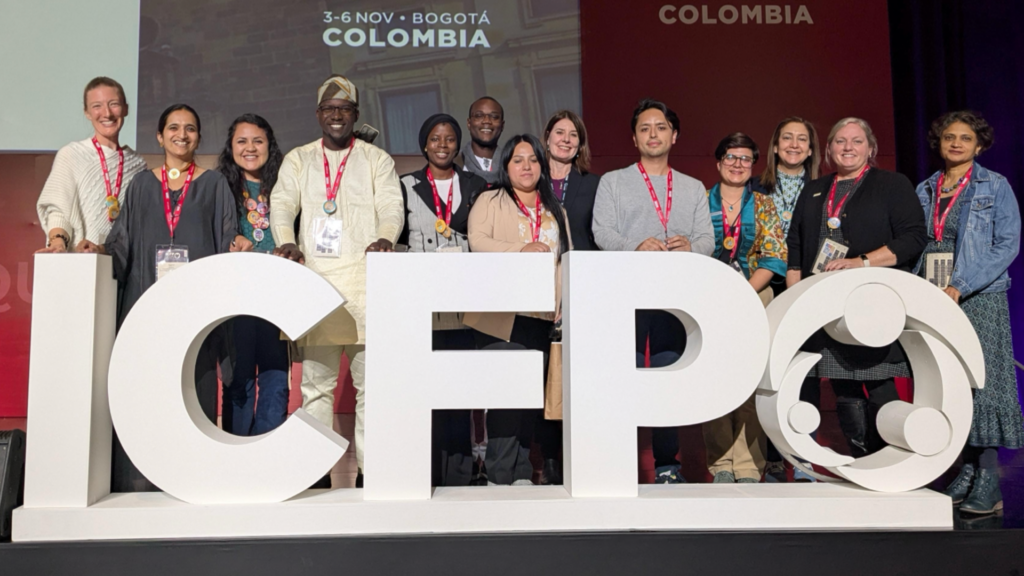
One year ago, more than 3,000 people gathered in Bogotá for ICFP 2025. They met at a hard moment. Funding cuts were closing programs, anti-rights movements were gaining ground, and many organizations were working in survival mode.
The conference answered with solidarity and a long list of commitments. But conferences end.
The Private Sector Subcommittee named the real test in its reflections: success “depends on what happens in the 6-24 months after conference, not what happened during it.” One year in, the answer is taking shape. ICFP 2025 should not be measured only by four days in Bogotá, but by what its community has continued to build, advance and influence since.
In this reflection
- What each ICFP subcommittee committed to in Bogotá, and why the real test came after the conference.
- How those commitments turned into action: the Equity Pause Checklist at AIDS 2026, frontline climate voices, youth leaders and promises kept.
- Why cross-subcommittee collaboration is the clearest sign the community kept building.
The commitments we made
In Bogotá, each subcommittee left with priorities that reached well beyond the conference itself.
The Power Shifting Subcommittee called for “power circulation”: redistribution as an ongoing practice, not a one-time transfer. It launched the Equity Pause Checklist to help organizations test whether equity truly guides their work. The Youth Subcommittee argued that young people need resources and decision-making power, not just platforms. The Humanitarian and Crisis Settings (HCS) and Environment and Climate Change (ECC) Subcommittees pledged to keep climate, crisis and SRHR conversations alive between conferences.
Others committed to stronger advocacy and accountability, equitable private-sector engagement, more inclusive evidence, demographic policies that open opportunities for women and young people, and a unified response to mis- and disinformation. The thread connecting them all: the work could not stop when the conference did. It hasn’t.
From priorities to progress
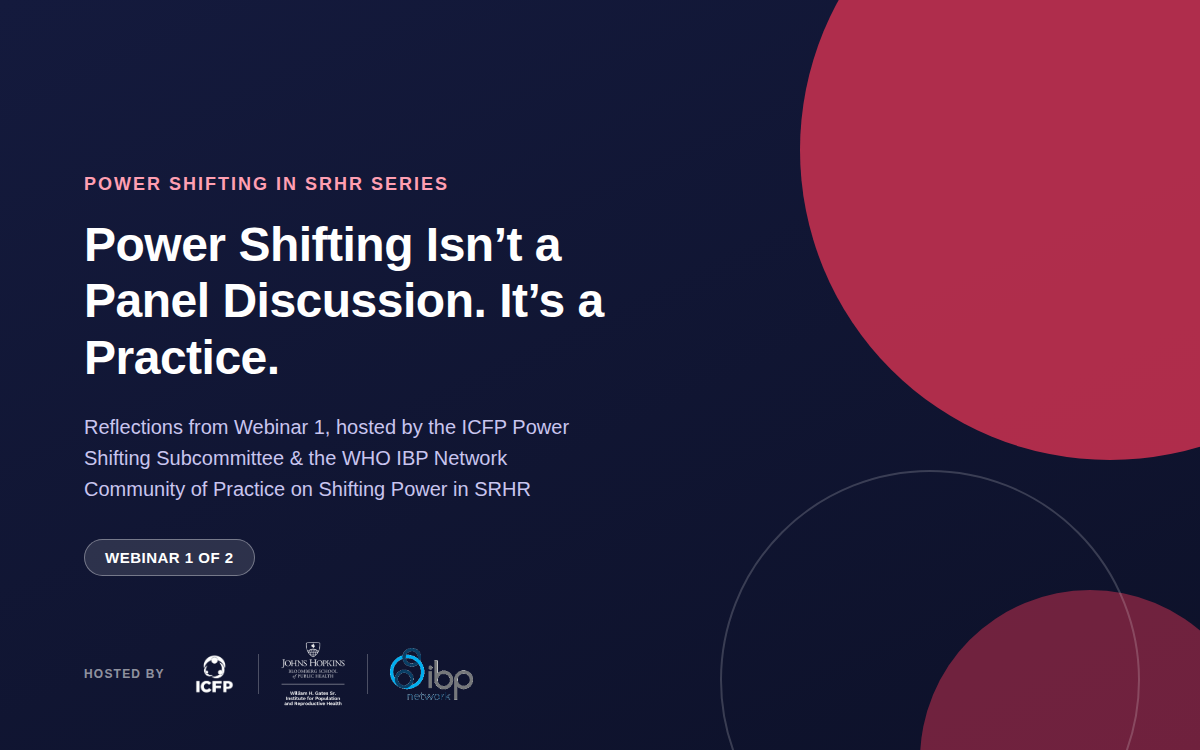
One year on, the work hasn’t stopped. The Equity Pause Checklist has traveled well beyond Bogotá. In July, the Power Shifting Subcommittee brought it to the Women’s Networking Zone at AIDS 2026 in Rio de Janeiro. Centering the knowledge of women living with HIV, participants named power imbalances in table discussions held in four languages, and left with concrete commitments. As co-chair Goodness Ogeyi Odey titled her reflection this year: “Power Shifting Isn’t a Panel Discussion. It’s a Practice.” The subcommittee is now measuring the tool’s uptake and mobilizing toward an Equity Fund.
Frontline voices are shaping the climate conversation. ECC co-chair Manisha Thapa wrote about living through Nepal’s flash floods, and what something as basic as underwear reveals about SRHR in a climate crisis.
Young leaders are being heard on their own terms. In January, the Program Implementation Subcommittee gave youth leaders a stage to present the work they had planned to share at ICFP 2025. Youth Trailblazer Neira Budiono of Indonesia wrote about integrating SRHR and mental health.
Promises made on stage were kept. The Scientific Subcommittee had pledged a Power of FP webinar series, and with the newly renamed Demographic Futures Subcommittee, it delivered a session just last week on how family planning shapes women’s education, employment and decision-making.
The power of community
What stands out most is how rarely any subcommittee worked alone.
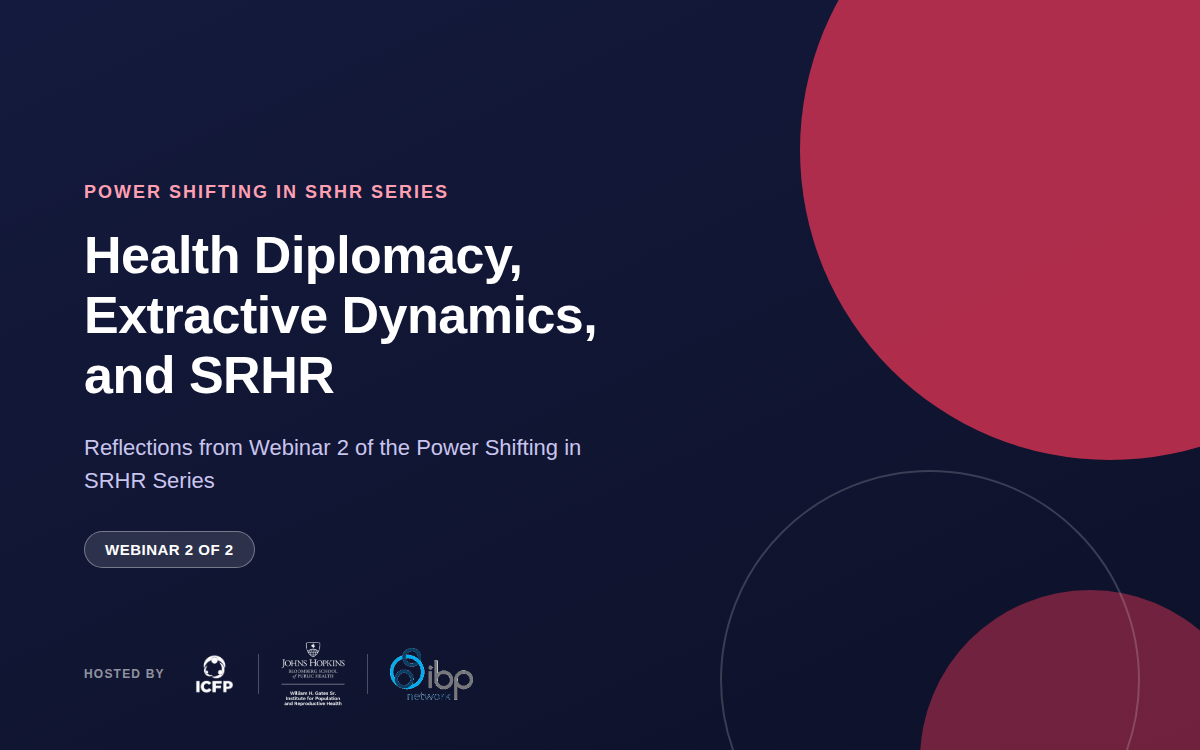
Program Implementation and Power Shifting co-hosted a two-part series, moving from power in everyday practice to the geopolitics of global health diplomacy. HCS and ECC, who co-planned the “Hotspots” pre-conference in Bogotá, went further. They built a shared Community of Practice that now connects more than 250 members. The Faith Subcommittee, after sharing lessons from faith-based programs in Kenya and Nigeria, is shaping a youth and faith webinar.
Some communities are changing shape so they can last. The Communications Subcommittee has become the SRHR Communications Community of Practice. Its first planned initiative, the “Governing Visibility” webinar series, will take on a challenge members face daily: SRHR content losing reach, or being restricted, on the platforms where audiences live.
Across the subcommittees, new co-chairs have been selected and onboarded, bringing fresh leadership and renewed energy to the work ahead.
This is collective ownership in practice. No single organization holds these priorities. They belong to the people who keep showing up.
“Bogotá gave us four days together. What I’ve seen since is a community that refused to let those days be the end of the story. ICFP’s true measure isn’t what happens on stage, but what people keep building after they go home.”
— Amarachi Ijeoma, ICFP Community Liaison
Looking ahead
The Private Sector Subcommittee’s question still stands: will women in 2027 have better access to contraception and abortion than they did in 2025? No community can answer it alone, but what we do next is part of the answer.
ICFP’s subcommittees are open to anyone working to advance family planning and SRHR: researchers, implementers, advocates, communicators, faith leaders, young people and funders. There is a place for you.
Join the community
Join a subcommittee and help shape the next phase of collective action. Bogotá is where we made our commitments. What we build together is how we keep them.
About the Author
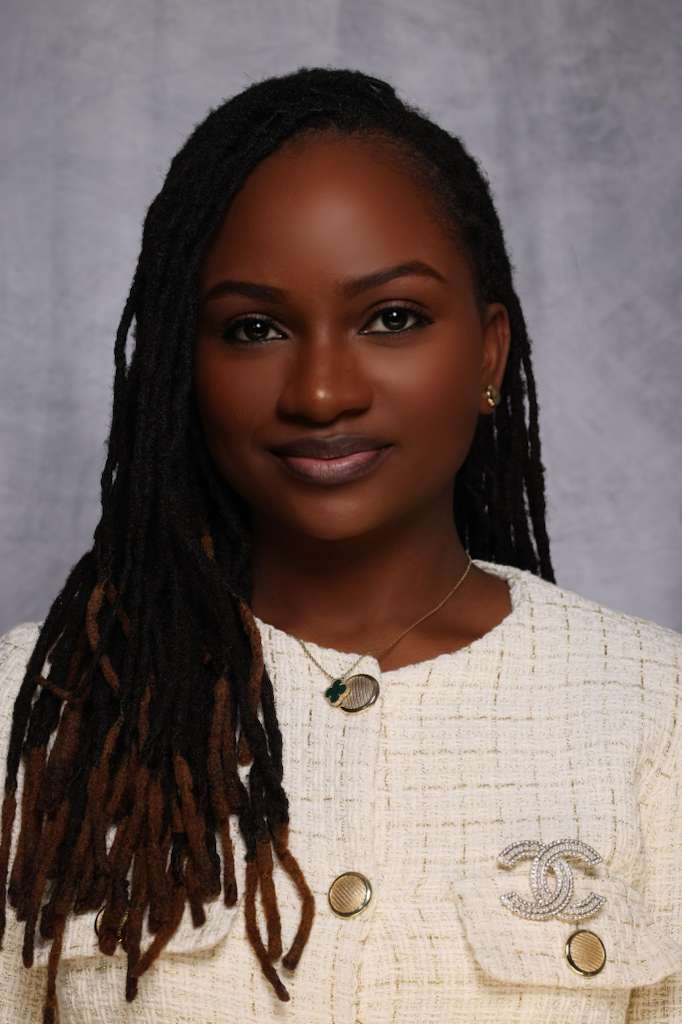
Amarachi Ijeoma
Community Liaison
Amarachi Ijeoma is a fertility physician and global health professional serving as Community Liaison for the William H. Gates Sr. Institute for Population and Reproductive Health at Johns Hopkins Bloomberg School of Public Health. She supports the ICFP Secretariat, coordinating engagement across subcommittees and global partner and community networks. Amarachi holds an MPH in Women’s and Reproductive Health from Johns Hopkins and is passionate about advancing health equity, reproductive health, and meaningful Global South engagement.