Reflections from Webinar 1 of the Power Shifting in SRHR Series
By Goodness Ogeyi Odey, Co-Chair, ICFP Power-Shifting Subcommittee
On May 13th, 2026, the ICFP Power Shifting Subcommittee and the WHO IBP Network Community of Practice on Shifting Power in SRHR opened a two-part webinar series with a question that felt more urgent than usual: what does power shifting actually look like when the money is drying up?
It’s a fair question. Over the past year, funding cuts and frozen aid have forced organizations across the sexual and reproductive health and rights (SRHR) sector to rethink not just their budgets, but who gets to hold decision-making power in the first place. This first webinar, “Power Shifting in Practice,” brought together practitioners from Kenya, Myanmar, and the Republic of Benin, alongside a research leader working across Africa, to talk honestly about what they’ve learned.
In This Recap
- Funding cuts aren’t just shrinking budgets — they’re forcing a reckoning over who actually holds decision-making power in SRHR work.
- Four practitioners from Kenya, Myanmar, and Benin describe what power shifting looks like as daily practice, not policy language.
- The throughline: it’s about who sets the agenda, who controls the money, and who is trusted to know what their community needs — not just who has a seat at the table.
It starts with who’s in the room
Goodness Ogeyi Odey, co-chair of the ICFP Power Shifting Subcommittee, opened the session by placing it in the context of a longer arc. This wasn’t the first time the community had gathered around this question. A similar webinar series ran back in 2023, shortly after the ICFP2022 conference in Thailand, where organizations first shared how they were navigating power dynamics on the ground. Three years on, the landscape looks very different. Last year alone saw major philanthropic bodies and governments cutting or freezing aid, and Goodness was direct about what that means now: the question is no longer just how power is shared, but how that sharing holds up when the funding behind it disappears.
Nandita Thatte, a technical officer at WHO who leads the IBP Network, followed with a reminder that WHO’s own mandate comes from its 194 member states, not from donors or foundations, and that even a large, member-driven institution has to do its own internal work on power.
“It’s an opportunity for us to think differently on how we fund global health, who’s in that driver’s seat, and how this global health architecture can actually work for the people that need it the most.”
— Nandita Thatte, WHO IBP Network
Four practitioners, one recurring theme: trust the community
The heart of the session was a panel discussion moderated by Esenam Amuzu, Gender and Media Professional, Reporter – Family Planning Media Network. Each speaker described power shifting not as a single policy or grant condition, but as a set of daily, sometimes uncomfortable choices.
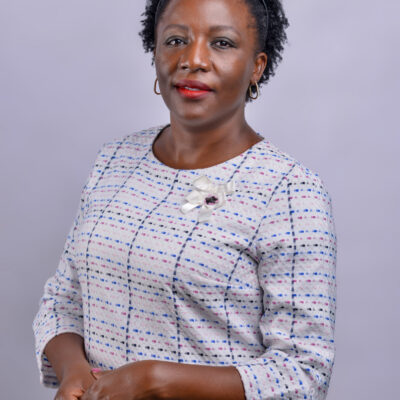
Evelyne Opondo
Executive Director, International Center for Research on Women (ICRW) Africa
Evelyne Opondo traced her own path from a Kenyan legal aid organization to ICRW’s leadership, describing how the organization restructured from a headquarters-led international NGO into a decentralized network with autonomous, locally governed regional offices. For ICRW, she said, that meant asking hard questions about who defines research priorities, who decides what counts as success, and whose knowledge is treated as credible in the first place.
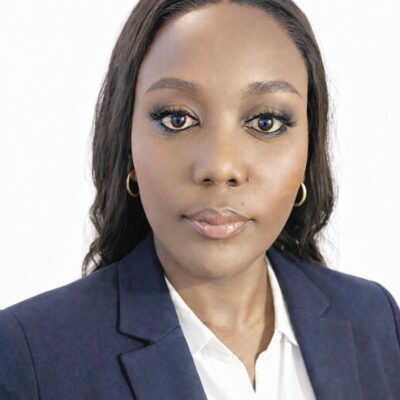
Patricia Nudi Orawo
Founder and Executive Director, STADA Kenya
Patricia Orawo talked about building STADA Kenya around the principle that the communities an organization claims to serve should be designing the solutions, not receiving them. In practice, that has meant hiring young mothers and displaced persons directly onto STADA’s staff, and letting a committee of young mothers make real decisions about how projects run. She was also candid about funding: STADA has learned to turn down funding streams that could compromise its programs or its relationship with the communities it works in, and has built social enterprises, including a reusable sanitary pad initiative run by local women, so that projects can outlast any single grant cycle.
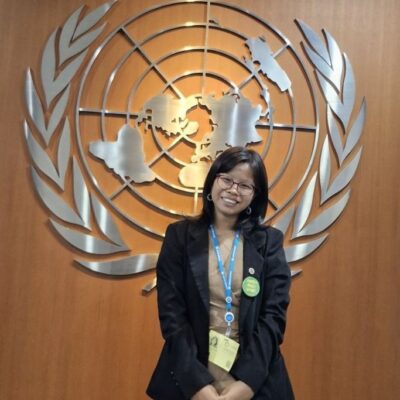
Phyu Nwe Win
Karenni Policy Support · Gender in Humanitarian Action Working Group · Asian Network to End FGM/C
Phyu Nwe Win brought a harder edge to the conversation, describing the realities of working in Myanmar’s humanitarian space since 2021. She spoke about the security risks of even gathering to share data, the barrier that formal registration requirements create for local organizations trying to access funding directly, and her conviction that power shifting only means something when it changes who leads and who is funded, not just who is consulted.
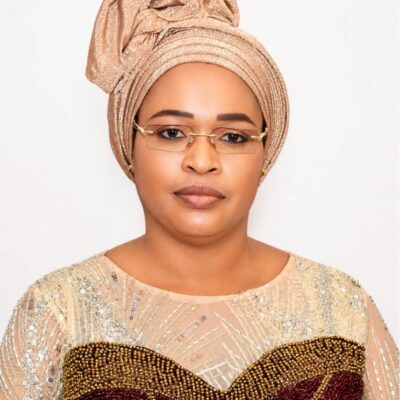
Blandine Kotobiodjo
Gender and SRHR Specialist, Benin’s National Institute for Engineering Training and Capacity Building
Blandine Kotobiodjo reflects on her work at the intersection of gender, education, and sexual and reproductive health. She described power shifting as returning decision-making to local actors, communities, women, young people, and national institutions, rather than importing models designed elsewhere. For her, shifting power in health education means involving national actors in curriculum design, respecting local languages and cultures, and strengthening women’s leadership in decision-making spaces.
What participants added
The breakout discussion pulled in perspectives from well beyond the panel. Participants from Chile and India described how shifts toward more conservative or patriarchal politics are shrinking civil society space and budgets for programs like early childhood protection and family planning, sometimes through executive decree that bypasses legislative oversight entirely. A participant reflecting on Rotary International’s evolution noted a real, if gradual, shift in leadership toward youth and women in an organization with a traditionally patriarchal structure. Another participant raised a pointed question about research ethics: as organizations decentralize, who ensures that ethical standards for protecting research participants remain consistent across newly autonomous regional structures?
The throughline
Across very different contexts, a shared idea kept surfacing: power shifting is not primarily about seats at a table or lines in a strategy document.
It’s about who sets the agenda, who controls the money, who defines success, and who is trusted to know what their own community needs.
When resources shrink, that work doesn’t get easier. But as several speakers suggested, constrained times may be exactly when the excuses for not sharing power start to run out.
Continue the series
Read the blog piece on Webinar 2 of the Power Shifting in SRHR series on June 10th, 2026, where we delved into the geopolitical dimensions of health diplomacy and what equitable, locally-driven alternatives to extractive funding models could look like.
Watch the Webinar 1 Recording
About the Author
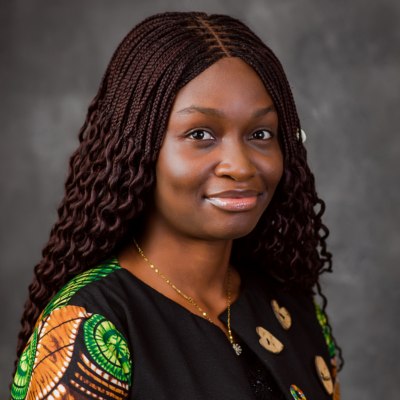
Goodness Ogeyi Odey
Goodness Ogeyi Odey is a Public Health Practitioner passionate about advancing health systems strengthening and equitable engagement toward global sustainable development and universal health coverage. She is a Chevening Scholar pursuing an MSc in Health Policy, Planning and Financing at the London School of Hygiene and Tropical Medicine (LSHTM) and the London School of Economics and Political Science (LSE). In 2022, she received the Diana Award and the ICFP Trailblazer Award in recognition of her leadership in advancing health equity in Africa through advocacy, research, and sustainable interventions. She currently serves as co-chair of the ICFP Power-Shifting Subcommittee and the Shifting Power in SRHR Community of Practice. Above all, Ogeyi is a child of God, and evidently, more than any eyes can see.